
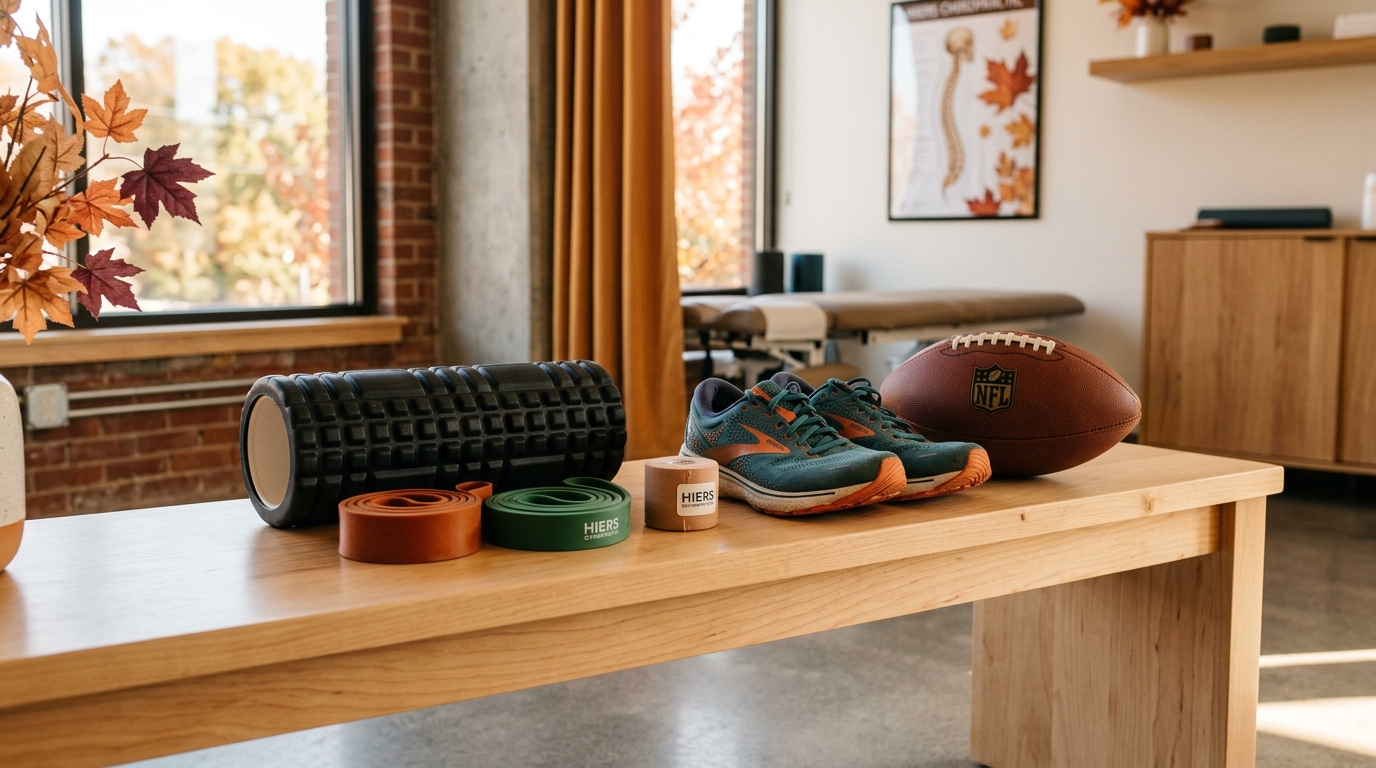
Fall Sports Injuries: Sports Chiropractic Care for Charlotte Athletes
Fall sports can bring a lot of energy to Charlotte—from football and soccer to cross-country, volleyball, tennis, and weekend recreation leagues. A sports chiropractor in Charlotte can help athletes and active families understand common musculoskeletal concerns, restore comfortable movement, and build better recovery habits after a minor injury or overuse flare-up. At Hiers Chiropractic, we provide personalized, non-invasive care for youth and adult athletes who want support for mobility, muscle balance, and a safer return to activity.
Not every ache requires the same response. Some soreness improves with rest and thoughtful recovery, while certain symptoms need prompt medical or orthopedic evaluation. Knowing the difference is an important part of protecting your health throughout the season.
Why Fall Sports Can Lead to Injuries
Fall schedules often become busy quickly. Athletes may move from summer conditioning into practices, games, school routines, and less sleep with little time for their bodies to adapt. A sudden increase in running, lifting, jumping, throwing, or contact can overload muscles, tendons, and joints.
Common fall sports concerns include ankle sprains, knee pain, hamstring or calf strains, shoulder irritation, low-back discomfort, neck stiffness, shin pain, and muscle tightness. Contact sports can also involve collisions and falls, while repetitive sports such as cross-country, golf, tennis, and volleyball may contribute to overuse patterns.
For younger athletes, growth spurts, developing coordination, and back-to-back practices can add another layer. Adults returning to a league or training plan after time away may face similar challenges when activity increases faster than strength and mobility.
Warning Signs That Deserve Attention
Muscle soreness after a new workout can be normal, but pain should not simply be ignored because a game is coming up. Pay attention when pain is sharp, worsening, recurring with the same movement, or changing how an athlete runs, walks, throws, or lands.
- Swelling, bruising, visible deformity, or an inability to bear weight
- A joint that feels unstable, locks, catches, or gives way
- Numbness, tingling, weakness, or pain that travels into an arm or leg
- Persistent headaches, dizziness, confusion, nausea, vision changes, or loss of consciousness after a hit or fall
- Severe neck or back pain, especially after trauma
- Pain that does not improve with reduced activity or keeps returning during play
Seek prompt medical care for serious symptoms, suspected fractures or dislocations, concussion symptoms, severe trauma, or loss of bowel or bladder control. Chiropractic care does not replace emergency, concussion, orthopedic, or other medical evaluation when those services are needed. Hiers Chiropractic can coordinate care appropriately and help patients understand whether a non-invasive approach may be suitable after urgent conditions have been addressed.
How a Sports Chiropractor in Charlotte Can Support Recovery
At Hiers Chiropractic, care begins with an evaluation of your symptoms, activity demands, movement patterns, posture, and relevant health history. The goal is not to rush someone back onto the field or court. It is to identify factors that may be contributing to discomfort and create a plan that supports appropriate recovery.
Depending on the individual and the nature of the condition, chiropractic adjustments may help improve joint motion and reduce restrictions that can affect movement. This may be useful for athletes dealing with stiffness or mechanical discomfort in the spine and extremities. Care is tailored to the patient’s age, comfort level, and needs.
Soft-tissue approaches, including massage and stretch therapy, can also help address muscle tension and restricted movement. When tight muscles are pulling unevenly around a joint, improving tissue mobility may make it easier to move with better control. Rehabilitation exercises and mobility guidance can then support strength, coordination, and gradual progression back to sport.
Hiers Chiropractic may also discuss other appropriate non-invasive options, such as laser therapy or spinal decompression, when clinically appropriate. Recommendations depend on the diagnosis, symptoms, and overall care plan; no single treatment is right for every athlete.
Reducing the Risk of Reinjury
Feeling better is only one part of recovery. Returning to full activity before the body has regained enough mobility, stability, and strength can increase the chance of symptoms coming back. A thoughtful rehabilitation plan focuses on how an athlete moves, not just where it hurts.
For example, recurring knee discomfort may be influenced by limited hip mobility, poor landing mechanics, weak gluteal control, or an ankle that never fully recovered from a previous sprain. Ongoing low-back discomfort may relate to training load, posture, core endurance, or limited movement through the hips and thoracic spine.
Our approach to chiropractic care includes education that patients can use outside the office. That may involve simple mobility drills, posture strategies, strengthening recommendations, or guidance on modifying activity while healing. For children and teens, we also encourage families to communicate with coaches and follow age-appropriate return-to-play recommendations.
Practical Warmup and Recovery Habits
A few consistent habits can make a meaningful difference during a demanding sports season. Before practice or competition, aim for a dynamic warmup rather than relying only on static stretching. Start with a few minutes of easy movement, then include sport-specific drills that gradually raise body temperature and prepare the hips, ankles, shoulders, and core for activity.
- Increase intensity gradually, especially after a break, illness, or injury.
- Use movement-based warmups such as light jogging, lunges, leg swings, skips, arm circles, and controlled bodyweight exercises.
- Cool down with easy walking, gentle mobility work, and hydration.
- Prioritize sleep, regular meals, and adequate hydration to support recovery.
- Schedule rest days and avoid pushing through pain that changes normal movement.
- Replace worn footwear and use protective equipment that fits correctly.
For athletes with ongoing tightness or soreness, wellness care can be a useful way to monitor mobility and address small concerns before they become more disruptive. However, preventive care should always complement—not replace—smart training, qualified coaching, and medical guidance when symptoms are significant.
Care for Youth and Adult Athletes in Charlotte
Sports-related discomfort can affect athletes at every age. Youth athletes may need guidance that accounts for growth, school schedules, and developing movement patterns. Adult athletes may be balancing training with work, family responsibilities, past injuries, and the normal changes that come with an active life.
Hiers Chiropractic provides a holistic healthcare approach that considers the full picture: symptoms, daily habits, activity goals, posture, muscle balance, and recovery capacity. Whether you are a parent concerned about a young athlete’s recurring soreness or an adult hoping to stay active in Charlotte, our team can help you explore personalized, conservative options.
FAQ
Can chiropractic care help after a sports injury?
Chiropractic care may help with certain musculoskeletal injuries and movement-related discomfort by addressing joint mobility, muscle tension, and rehabilitation needs. The right approach depends on the injury and the patient. Serious injuries, concussion concerns, fractures, and symptoms involving significant neurological changes require prompt medical evaluation.
Should my child see a chiropractor for sports soreness?
Children and teens should be evaluated based on their individual symptoms, health history, and activity level. Hiers Chiropractic provides age-appropriate, personalized care and can help families determine whether chiropractic services may be appropriate or whether referral for medical evaluation is needed.
How soon can an athlete return to sports after treatment?
There is no universal timeline. Return-to-sport decisions should account for the type and severity of the injury, pain levels, range of motion, strength, balance, sport demands, and guidance from the appropriate healthcare professionals. Treatment should never be used to mask serious symptoms so an athlete can play through an injury.
What is the difference between soreness and injury pain?
General soreness often develops after unfamiliar or demanding activity and improves with rest and recovery. Injury pain may be sharp, localized, associated with swelling or instability, worsen during activity, or alter normal movement. When in doubt, an evaluation can help clarify next steps.
Can massage therapy be part of an athlete’s recovery plan?
Massage therapy and stretch therapy may help reduce muscle tension and support relaxation and mobility as part of a broader recovery plan. It should be matched to the athlete’s condition and avoided or modified when an acute injury requires medical assessment first.
If fall sports pain, stiffness, or recurring injuries are keeping you or your athlete from moving comfortably, contact Hiers Chiropractic for an evaluation. Visit us at 4523 Park Road A-102, Charlotte, NC 28209, or call (704) 919-0411 to discuss personalized, non-invasive care.